Concentrated Bicarbonate Solution - BASIC Component
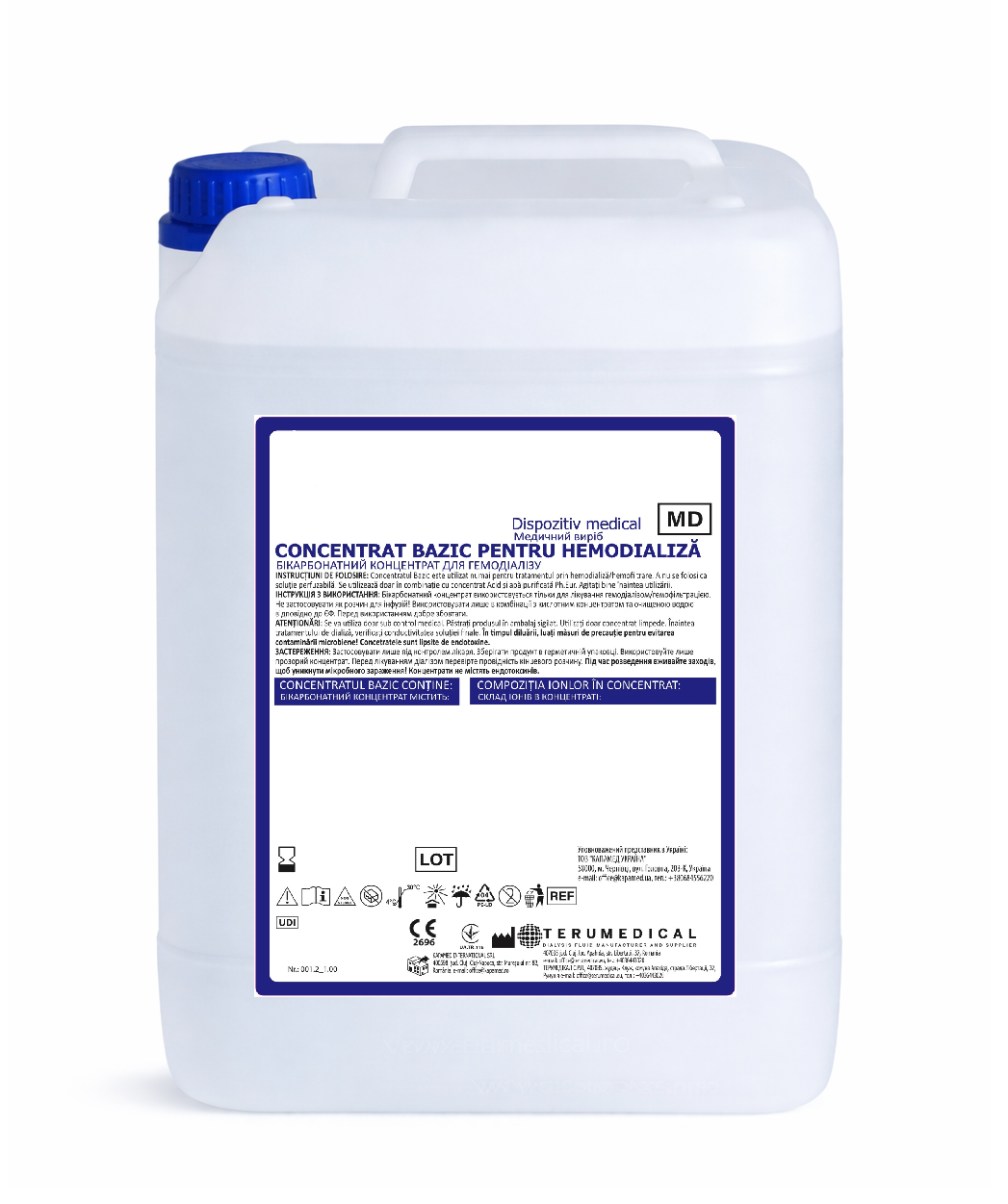
Product Range & Composition
| ID | Name | Qty(L) | UDI-DI | Na+ (mmol/L) |
HCO3- (mmol/L) |
NaHCO3- (mmol/L) |
Cl- (mmol/L) |
NaCl (mmol/L) |
|---|---|---|---|---|---|---|---|---|
| 1 | TERUSOL B-35 | 5 | 5940597530007 | 35.00 | 35.00 | 84.25 | - | - |
| 10 | 5940541537373 | |||||||
| 2 | TERUSOL B-39 | 10 | 5940541537366 | 65.00 | 39.00 | 66 g/l | 26.00 | 30.6 g/l |
Instructions for Use (IFU) — TERUSOL BASIC Hemodialysis Concentrate
Intended Purpose & Clinical Benefits
Intended purpose: Dialysate preparation. It is used by diluting with acidic hemodialysis concentrates in a proper haemodialysis solution (dialysate) that obtained from applicable dilution provides to be removed the toxics and waste materials in the blood and to be replaced deficient electrolytes through semi-permanent membrane in haemodialysis instrument not directly contacting with blood.
Basic hemodialysis concentrate TERUSOL is used in extracorporeal dialysis with sodium bicarbonate. Basic hemodialysis concentrate is the major component of the system designed for hemodialysis. Only used in combination with purified water for hemodialysis and acidic concentrate for hemodialysis to prevent inflammation during treatment.
Clinical benefits: The Hemodialysis concentrate solution is prepared according to the individual patient's needs and greatly helps to regulate the electrolyte and acid-base balance to remove all the metabolic wastes.
Intended patients
- Age: 1 day* to geriatrics
- Gender: not relevant
- Weight: not relevant
- Nationality: Not relevant
- Patient state: Not relevant
Indications
Acute renal failure
- Severe fluid overload
- Refractory hypertension
- Uncontrollable hyperkalemia
- Nausea, vomiting, poor appetite, gastritis with hemorrhage
- Lethargy, malaise, somnolence, stupor, coma, delirium, asterixis, tremor, seizures
- Pericarditis (risk of hemorrhage or tamponade)
- Bleeding diathesis (epistaxis, gastrointestinal (GI) bleeding and etc.)
- Severe metabolic acidosis
- Blood urea nitrogen (BUN) > 70–100 mg/dl
Chronic renal failure (CRF)
- Pericarditis
- Fluid overload or pulmonary edema refractory to diuretics
- Accelerated hypertension poorly responsive to antihypertensives
- Progressive uremic encephalopathy or neuropathy such as confusion, asterixis, myoclonus, wrist or foot drop, seizures
- Bleeding diathesis attributable to uremia
End-stage renal disease (ESRD)
- Acid-base problems
- Electrolyte problems
- Intoxications
- Overload, fluid
- Uremic symptoms
Contraindications
There are no absolute contraindications for bicarbonate dialysis.
Relative contraindications
- Hyperkalemia, hypocalcemia
- Refractory coagulopathy
Instructions & Precautions for Use
Instructions for use: The basic concentrate is only used for hemodialysis/hemofiltration treatment. Do not use as an infusion solution! To be used only in combination with acid concentrate and Ph.Eur purified water. Shake well before use.
Precautions for use:
- Failure to follow these Instructions for Use may cause patient injury or death.
- The basic concentrate for hemodialysis TERUSOL will be used only under medical supervision.
- TERUSOL basic hemodialysis concentrate should only be used with acidic hemodialysis concentrate and should be diluted with purified hemodialysis water shortly before use.
1+34: 1.225 L. Basic concentrate + 1 L. Acidic concentrate + 32.775 L. purified water for hemodialysis
1+44: 1.575 L. Basic concentrate + 1 L. Acidic concentrate + 42.425 L. purified water for hemodialysis - This dilution process is applied according to the setting conditions of the hemodialysis machine, including the on-line procedures, for the on-line filtration and the treatment requirements of the patients.
- Precautions must be taken during dilution to prevent microbiological contamination.
- Before dialysis treatment, check the conductivity of the final solution. Using dialysis solution with incorrect conductivity or pH can cause serious injury or death. Consult the hemodialysis machine manufacturer's instructions to determine the conductivity and pH of the final solution.
- Concentrate from opened canisters must be used within 24 hours.
Warnings
- The use of product is restricted only to practitioners (doctors, dialysis technicians/nurses).
- Do not use the product if the packaging is damaged! Do not use concentrate from open containers!
- Do not use the product after the expiration date!
- The lid of the TERUSOL basic hemodialysis concentrate container is blue, so as not to be confused with other concentrates.
- Replace a leaking canister immediately. Spills can cause slips and falls; clean up spills immediately.
- Please ensure that your hemodialysis machine is equipped with an endotoxin retention filter (ETRF) to remove bacteria and endotoxins from the dialysis fluid, creating an ultrapure dialysate, essential for patient safety.
Undesirable side-effects
Hypotension, nausea, vomiting or cramps may occur, so the hemodialysis procedure must be performed under medical supervision. For any adverse effects, consult your physician.
Label
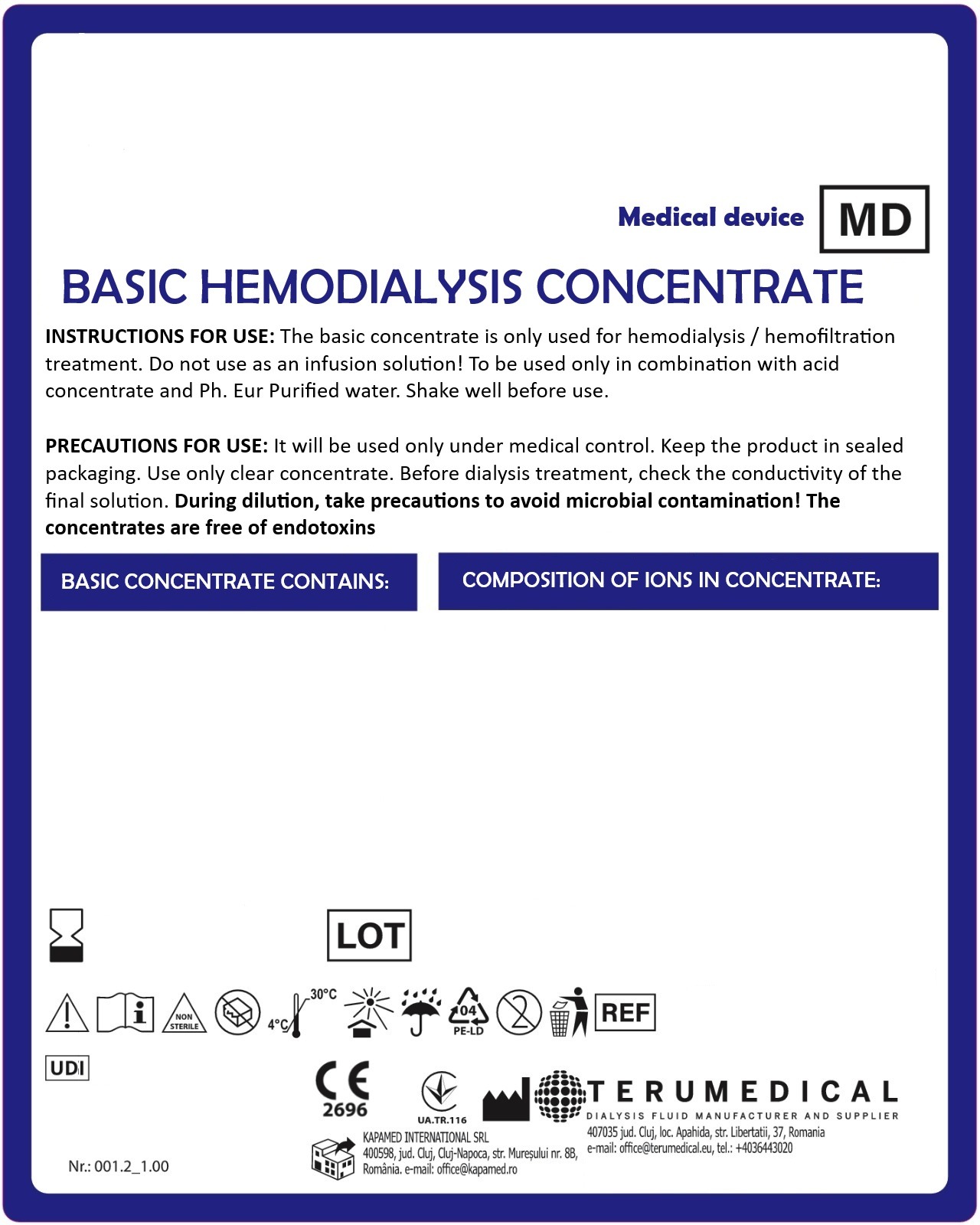
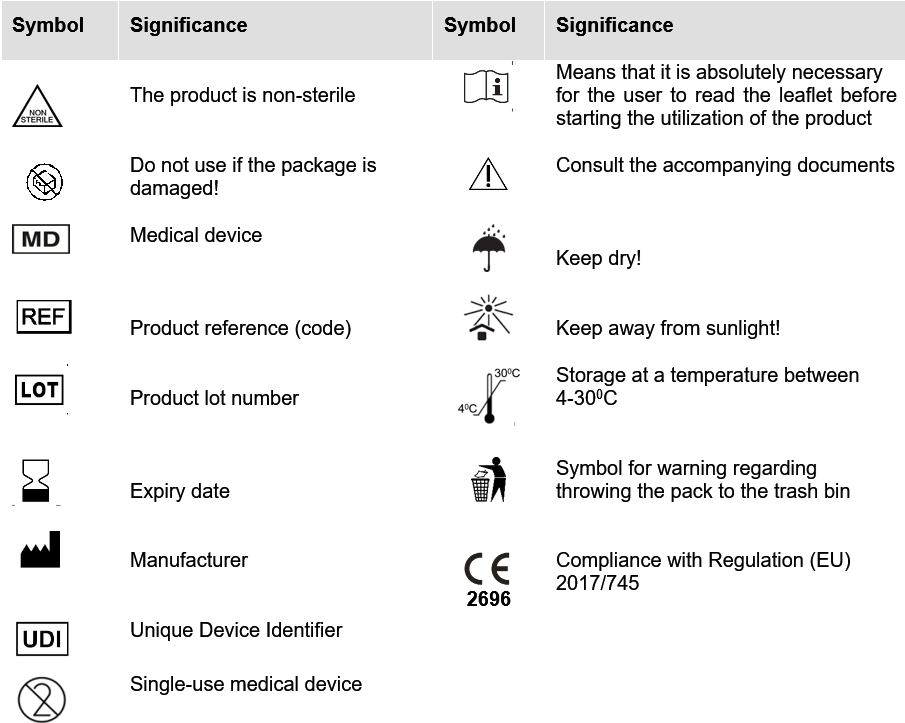
Legend